Below are concepts that have stuck with me from this last semester. I will share why I find these concepts interesting and how I have implemented them in my own work or how I plan to do so in the future.
Technology
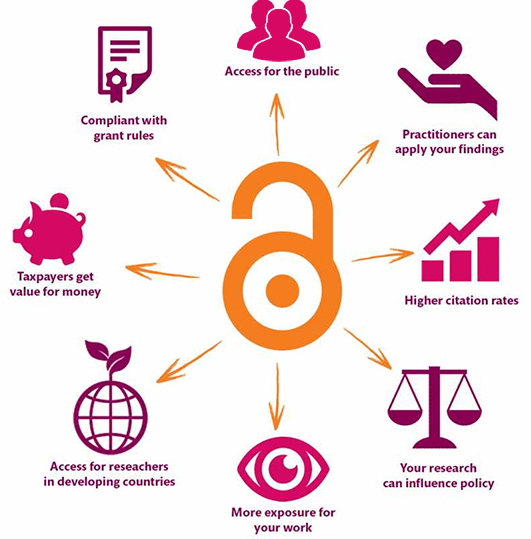
Open Access
“Research is the foundation for modern society” (sparcopen.org)
As humans, we have always been building upon the knowledge of our peers and ancestors. By communicating research findings, we push our society forward. Research is often done through government funding and is produced as a public good, although it is often not available to the public who paid for it. The internet and other new incredible technologies can be utilized to make research available to the public for free. As an information professional that holds freedom of information as an important value, I believe this is the direction academia should be headed.
I currently work at a university library whose institutional repository recently switched to Open Access. I am one of the administrators for the scholarship repository and in the coming year I plan to work more closely with faculty and relay to them the benefits of Open Access.
Data Science
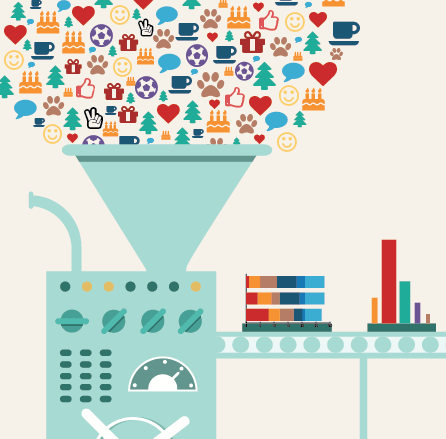
“Data science is a field that comprises everything that[‘s] related to data cleansing, preparation and analysis” (Monnappa, A., para. 2).
In today’s world, almost everything we do involves data of some kind. Library science has evolved in the last twenty years to a profession that offered books and other physical resources to a profession that is entwined deeply with technology. Librarians can use data science algorithms to improve the results for search queries in catalogs and databases.
In the future I’d like to work on database development and management and will use these kinds of algorithms to better understand my user’s queries and needs. Before then, I plan to expand my skills to be able to clean spreadsheets quickly and easily using the bash shell. This will help me manipulate data efficiently and give me more control when visualizing data retrieved from assessments.
Artificial Intelligence
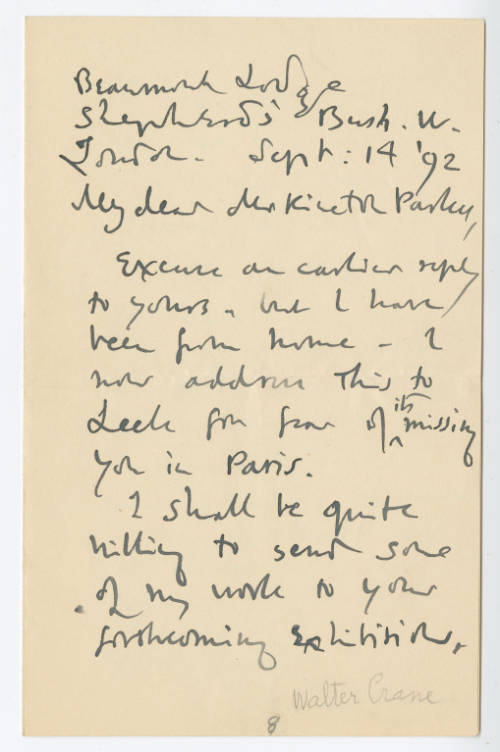
In the past, Optical Character Recognition (OCR) has been used to turn pdfs into searchable documents. This is a huge benefit when users wish to search for a specific term within a document. The newer versions of OCR basically work to turn a pdf into a transcript which can work really well for visually impaired people using screen readers. OCR is the industry standard and is done through an type of machine learning based on statistics of what a type-written character most likely is. Handwritten Text Recognition (HTR) is unique in that it can identify handwriting like cursive by utilizing a type of artificial intelligence using neural networks to ‘guess’ the word.
Using artificial intelligence in to provide better access to primary resource materials is very exciting. A possibility for this technology that hasn’t been talked very much about in the tech industry or in academia, is the potential to create incredibly accurate transcripts of handwritten text that can be read via screen reader. This kind of technology will allow patrons with visual impairments to access primary resources without the assistance of another person. I’m hoping to look into this technology further and hopefully implement it in my own work in digital collections.
Strategic Planning
“Planning allows managers to think ahead to the things that need to be done and to the methods for getting them done, in order to accomplish organizational goals” (Stueart, R. & Moran, B.).
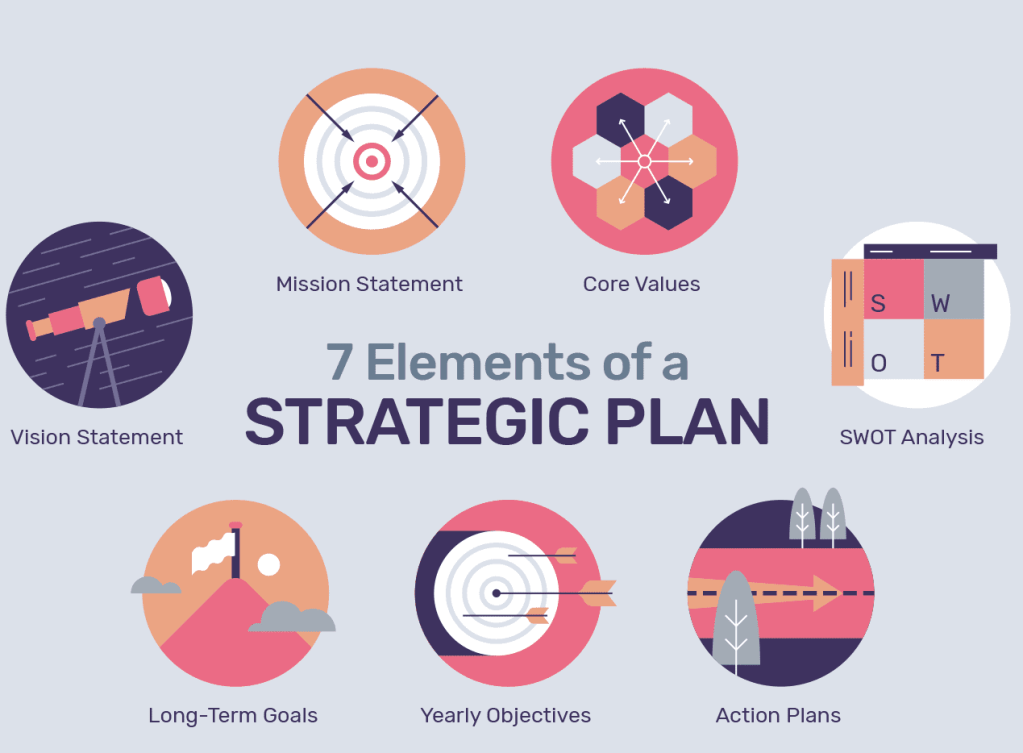
By following your institution’s mission, vision, and values statements, you can ensure that any decision you make during your planning process will align with your goals and values.
I recently went through the Strategic Planning process at my work and helped to create our library’s own mission, vision, value apart from the University’s. We started with this this process to help guide us through each step moving forward.
we then worked together to identify different objectives we wished to accomplish in the next 3 years. We identified areas such as technology, reference, liaison, and physical spaces. We then worked with the administration to break these up into specific goals that are to be completed in a certain amount of time. These goals are broken up into tactics and assigned to various working groups and task forces depending on how long they are expected to take.
I am currently on a 3-year liaison working group whose tactics are to perform an environmental scan of our liaison program and our peer institutions’ programs. We will then suggest a new structure for the liaison program at our own library.
Citations
Crane, W. (1892). My dear Mr. Kieth Parker, excuse me… Donohue Rare Book Room, Gleeson Library|Geschke Center, University of San Francisco. Retrieved from https://digitalcollections.usfca.edu/digital/collection/p264101coll8/id/44/rec/8
The Balance (2018). 7 Elements of a Strategic Plan [Digital Image]. Retrieved December 11 2019 from https://www.thebalancecareers.com/strategic-plan-elements-2276139
Buchanan, S., & Cousins, F. (2012). Evaluating the strategic plans of public libraries: An inspection-based approach. Library and Information Science Research, 34, 125-130. doi: 10.1016/j.lisr.2011.1
Deoras, S. (2018). Data Cleaning [Digital Image]. Retrieved December 11, 2019 from https://analyticsindiamag.com/10-best-data-cleaning-tools-get-data/
Hirsh, S. (Ed.). (2018). Information Services Today: An Introduction (2nd ed.) New York, NY: Rowman & Littlefield.
Kingsley, D., & Brown, S. (2019). Benefits of Open Access [Online Image]. Retrieved December 10, 2019 from https://kib.ki.se/en/publish-analyse/publish-open-access/why-open-access
Monnappa, A. (2019). Data Science vs. Big Data vs. Analytics. Retrieved from https://www.simplilearn.com/data-science-vs-big-data-vs-data-analytics-article
Open Access (2019). Retrieved from https://sparcopen.org/open-access/
Stueart, R. D., & Moran, B. B. (2007). Library and information center management (7th ed.). Westport, Conn.: Libraries Unlimited.
Quartex (2019). Handwritten Text Recognition. Retrieved from https://www.quartexcollections.com/htr-in-quartex
 Info 204 Professional Synthesis